
What Drives Water Heater Replacement Cost: Choosing Tank or Tankless Systems
Understanding water heater replacement cost starts with choosing between a traditional tank system and a tankless model, each with distinct price points and operating characteristics.
Traditional tank water heaters store 30 to 80 gallons of hot water and typically cost between $800 and $1,800 for the unit itself. Installation labor adds another $500 to $1,200, bringing your total investment to roughly $1,300 to $3,000. These systems are reliable workhorses that most plumbers can install quickly, and replacement parts are readily available throughout Middle Georgia.
Tank models work by maintaining a reservoir of hot water that’s ready whenever you turn on a faucet or start the dishwasher. The downside is standby heat loss: your system constantly reheats water even when nobody’s home, driving up your utility bills month after month. In Macon’s humid climate, where air conditioning already strains your summer electric bill, that extra energy consumption adds up.
Electric tank water heaters are the most common in our area, particularly in homes without existing gas lines. A standard 50-gallon electric unit delivers enough hot water for a family of four under typical usage. Gas tank models heat water faster and cost less to operate if you already have natural gas service, making them popular in neighborhoods like Hillcrest and Forest Hill where gas infrastructure is well established.
Tankless water heaters heat water on demand rather than storing it. The units themselves run $1,000 to $3,500, with installation labor between $1,200 and $3,500 depending on whether you need gas line modifications or electrical upgrades. Your all-in cost typically lands between $2,200 and $7,000. While pricier upfront, tankless systems deliver endless hot water and can slash your energy bills by 24 to 34 percent compared to tank models.
For families in humid climates like ours, tankless systems offer another advantage: they free up valuable floor space and eliminate the risk of a 50-gallon leak flooding your utility room during a summer storm. When you consider that Middle Georgia’s hard water can shorten a traditional tank’s lifespan to as few as 8 years compared to the national average of 10 to 12, the long-term economics start to favor tankless in many scenarios.
Tankless models require higher upfront electrical or gas capacity. An electric tankless unit pulls 120 to 150 amps, which may require a panel upgrade if your home has an older 100-amp service. Gas tankless models need larger gas lines and special venting that meets current code. These requirements explain why installation labor for tankless systems runs higher, but the result is a system that can last 20 years with proper maintenance.
Condensing tankless water heaters represent the premium tier, capturing exhaust heat to boost efficiency ratings above 95 percent. They cost $1,500 to $3,000 more than non-condensing models but deliver the lowest operating costs available. If you’re replacing an aging system and plan to stay in your home for a decade or more, the math often works in favor of this investment.
Hybrid heat pump water heaters split the difference between traditional tanks and tankless systems. They use a small compressor to extract heat from surrounding air and transfer it into stored water, combining a tank’s reliability with efficiency that rivals tankless models. Units cost $1,200 to $2,500, with installation adding $800 to $2,000. Georgia’s warm climate makes heat pump water heaters particularly effective here, since they perform best when ambient air temperatures stay above 40 degrees year-round.
The catch with hybrid models is space: they need clearance for air circulation and work best in utility rooms or garages with at least 1,000 cubic feet of space. They also produce cool air as a byproduct, which feels refreshing in summer but might require adjustment in winter months.
Choosing between these options depends on your household size, usage patterns, available space, and how long you plan to stay in your home. A growing family with teenagers who take long showers will appreciate tankless capacity. A couple in a smaller home might find a quality tank system meets their needs at half the upfront cost. Our plumbing team can walk you through the calculations specific to your situation, factoring in your utility rates, water quality, and existing infrastructure to recommend the system that delivers the best value over its lifetime.
How Fuel Type and Size Affect Your Water Heater Replacement Cost
Your existing fuel source plays a huge role in determining your final replacement cost. Switching fuel types can double or triple your installation expenses.
Electric water heaters are the most affordable to install, with basic 40 to 50-gallon models starting around $600 to $1,000 for the unit. Installation is straightforward if your electrical panel can handle the load, keeping labor costs between $500 and $900. Total project cost typically runs $1,100 to $1,900.
Electric models dominate Macon area homes because the infrastructure is already in place. Most utility rooms have a dedicated 240-volt circuit sized for a water heater, making replacement a simple swap. The trade-off is higher operating cost: electric resistance heating is less efficient than gas, and Georgia Power rates have climbed steadily over the past few years. Expect to pay $35 to $50 per month to run a standard electric tank water heater for a family of four.
Gas water heaters cost slightly more for the unit itself ($700 to $1,400) but offer faster recovery times, meaning your family won’t run out of hot water as quickly during back-to-back showers. Installation runs $600 to $1,200 if you already have gas lines in place. Expect to pay $1,300 to $2,600 total.
Natural gas heats water roughly twice as fast as electric resistance and typically costs 30 to 40 percent less to operate month to month. If you already have gas service for heating or cooking, staying with gas makes financial sense. However, if you’re considering adding gas service specifically for a water heater, you’ll face $1,500 to $3,000 in additional costs to run a line from the street and install the meter.
Propane is an option for homes outside city limits or in areas without natural gas infrastructure. Propane water heaters cost about the same as natural gas models, but fuel costs run higher and you’ll need space for a tank. Budget an extra $300 to $600 annually for propane compared to natural gas.
Hybrid or heat pump water heaters represent the premium option, with units costing $1,200 to $2,500 and installation adding another $800 to $2,000. These systems pull heat from surrounding air to warm your water, cutting energy costs by up to 60 percent. In our warm Georgia climate, they perform exceptionally well year-round.
Heat pump models need space to breathe and work best in areas that stay above 40 degrees, which describes Macon perfectly. They’re ideal for garage or basement installations where the cool exhaust air they produce won’t affect living spaces. Operating costs average just $15 to $25 per month, making them the cheapest fuel option over the long haul despite higher purchase prices.
Capacity matters too. A family of four typically needs a 50-gallon tank or a tankless system rated for 7 to 9 gallons per minute. Undersizing saves money upfront but delivers cold showers and frustration. Oversizing wastes energy heating water you’ll never use.
First-hour rating matters more than tank size. This number tells you how many gallons of hot water the system can deliver in a heavy-use hour, accounting for both stored water and recovery rate. A quality 50-gallon gas tank might have a 70-gallon first-hour rating, while a cheaper electric model of the same size delivers only 55 gallons. During busy mornings when everyone needs showers before work and school, that difference matters.
For tankless systems, flow rate determines capacity. Add up the gallons per minute for fixtures you might use simultaneously: a shower uses 2.5 GPM, a dishwasher 1.5 GPM, a washing machine 2 GPM. If you need to handle two showers plus a dishwasher at once, you need at least 6.5 GPM capacity, which means a mid-range or better tankless unit.
A qualified plumbing repair service can help you determine the right capacity for your household needs, factoring in peak demand times and future changes like kids heading off to college or elderly parents moving in. Getting the sizing right the first time prevents buyer’s remorse and ensures your investment delivers reliable performance for its entire lifespan.
Installation Labor and Permit Costs: What Affects Your Total Water Heater Replacement Price
Labor costs vary based on installation complexity, local code requirements, and how quickly you need service. Understanding these factors helps you budget accurately and avoid surprise charges.
Standard replacement labor ranges from $500 to $1,200 when your new water heater matches your old one in fuel type and location. The job typically takes three to five hours and includes removing the old unit, installing the new one, making connections, and testing the system.
This straightforward scenario assumes your existing plumbing, electrical, or gas connections meet current code and the new unit fits in the same footprint. Your plumber will drain and disconnect the old water heater, haul it away, position the new unit, connect supply lines and venting, fill the tank, check for leaks, and verify proper operation. Most installations in West Macon and Arkwright neighborhoods fall into this category, since homes were built with standard utility room layouts that accommodate typical replacement units.
Complex installations cost significantly more. If you’re switching from tank to tankless, upgrading from electric to gas, or relocating your water heater, expect labor charges between $1,500 and $3,500. These projects may require new gas lines, electrical panel upgrades, venting modifications, or structural changes to accommodate the new unit.
Converting from electric to gas tankless, for example, requires running a three-quarter-inch or larger gas line, installing proper venting through an exterior wall or roof, upgrading to code-compliant combustion air supply, and potentially reinforcing the mounting surface to handle a heavier unit. The same home built in the 1980s near Lake Tobesofkee might need a 200-amp electrical panel upgrade to support a whole-house electric tankless system, adding another $1,500 to $2,500 to the project.
Permits add $50 to $300 depending on your municipality and scope of work. Most jurisdictions in Middle Georgia require permits for water heater replacement, and inspections ensure your installation meets current safety codes. Licensed plumbers handle permit paperwork as part of their service, and you can contact our team to learn more about our transparent installation process.
Bibb County requires permits for any water heater replacement and charges $75 for the permit plus $50 for the inspection. If you’re converting fuel types or relocating the unit, you’ll need additional permits for gas, electrical, or plumbing work. Jones County and Peach County have similar requirements with slightly lower fees. The permit process typically adds two to five business days to your project timeline while the jurisdiction reviews plans and schedules inspection.
Skipping permits to save money creates problems down the road. If you sell your home, a title search may reveal unpermitted work that buyers will require you to correct. Insurance companies can deny claims for damage related to unpermitted installations. Licensed contractors pull permits as standard practice because they protect both you and them.
Emergency or weekend service typically adds 50 to 100 percent to your labor cost. During summer months when air conditioning units stress electrical systems and water usage spikes, having a trusted water heater maintenance service on speed dial can save you from paying premium emergency rates.
A water heater failure on Saturday morning doesn’t wait for Monday business hours, and nobody wants to go a weekend without hot showers. Emergency service calls in Macon typically run $150 to $300 just to dispatch a technician, with labor rates climbing to $150 to $200 per hour compared to standard rates of $75 to $125. The total premium for weekend or after-hours installation can add $500 to $1,000 to your project cost.
Scheduling replacement before your old unit fails completely helps you avoid emergency pricing. If your water heater is approaching 10 years old, makes rumbling noises, shows rust around connections, or delivers inconsistent water temperature, plan proactive replacement during regular business hours.
Hard water conditions throughout the region may also require installing a sediment filter or water softener during replacement, adding $200 to $800 to your project cost but extending your new water heater’s lifespan considerably.
Macon’s water supply contains significant mineral content, typically 7 to 12 grains per gallon hardness. Those minerals accumulate as sediment in the bottom of tank water heaters, reducing efficiency and creating hot spots that accelerate tank corrosion. Tankless systems are even more sensitive: mineral buildup in the heat exchanger can cut efficiency by 30 percent within three years and void your warranty if you don’t maintain annual descaling service.
A whole-house water softener costs $800 to $2,500 installed and protects not just your water heater but all your plumbing fixtures and appliances. For homeowners planning to stay in their homes long-term, adding water treatment during water heater replacement makes economic sense. Even a basic sediment filter at $200 to $400 catches the worst of the minerals and extends tank life by two to four years.
Professional Installation VS. DIY: How It Impacts Water Heater Replacement Cost and Value
When you’re facing a $2,000 to $4,000 expense, the temptation to cut costs with DIY installation or an unlicensed handyman is understandable. But improper water heater installation creates risks that far outweigh the savings.
Professional plumbers ensure your unit is sized correctly for your household’s needs. They calculate hot water demand based on fixtures, occupancy, and usage patterns rather than guessing. Proper sizing prevents the frustration of inadequate hot water and the waste of oversized equipment cycling constantly.
Sizing requires understanding not just how many people live in your home but how you use hot water. A family of four with teenagers who take 15-minute showers needs more capacity than a family of four with young children. If you frequently run the dishwasher and washing machine simultaneously, you need higher first-hour rating or GPM flow. A professional evaluates your actual usage, measures your incoming water temperature, and calculates the precise capacity needed.
Code compliance protects your home and family. Gas water heaters require proper venting to prevent carbon monoxide buildup. Electric installations must match your panel’s capacity and include appropriate shutoffs. Tank systems need code-compliant pressure relief valves and drain pans. Inspectors will flag violations, and fixing them later costs more than doing it right initially.
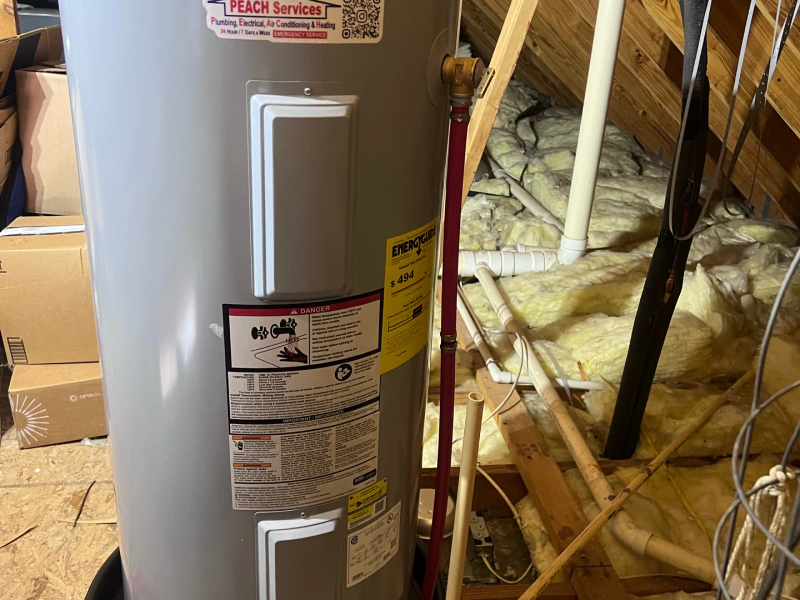
Current code in Georgia requires temperature and pressure relief valves piped to within six inches of the floor or to an approved drain. Drain pans are mandatory for water heaters installed in attics or above finished living spaces, with the pan drain piped to an exterior wall or floor drain. Gas venting must use approved materials, maintain proper clearances from combustibles, and terminate at least three feet above the roof surface.
These aren’t optional guidelines. An improperly vented gas water heater can produce carbon monoxide that accumulates in living spaces, creating a silent danger to your family. An electric water heater wired with undersized conductors can overheat and start a fire inside your walls. A pressure relief valve that drains into a bucket instead of a proper discharge pipe can scald anyone nearby if the valve activates under pressure.
Warranty protection depends on professional installation. Most manufacturers void warranties if unlicensed individuals install their equipment. That $1,500 water heater becomes a total loss if it fails prematurely and you can’t claim warranty coverage.
Read the fine print on any water heater warranty and you’ll find language requiring installation by a licensed, insured plumbing contractor following all manufacturer specifications and local codes. The manufacturer needs assurance that failure resulted from a defect in materials or workmanship, not improper installation. Without documentation from a licensed installer, you have no recourse when a two-year-old tank springs a leak or a five-year-old tankless unit stops heating.
Experienced technicians spot problems during replacement. They’ll notice corroded gas lines, outdated electrical connections, foundation settling that affects drainage, or venting issues that could cause future failures. Addressing these during installation prevents emergency callbacks and water damage.
During a typical replacement in an older Macon home, a skilled plumber might discover galvanized supply pipes that are 80 percent clogged with mineral deposits, cutting water flow to a trickle. Or they might find knob-and-tube electrical wiring that’s unsafe for modern water heater loads. Perhaps the original venting for a gas water heater uses materials that are no longer code-compliant, or the gas shut-off valve is corroded and won’t close completely.
Catching these issues during planned replacement lets you address them proactively at lower cost than you’d pay during an emergency repair. It also means your new water heater operates at peak efficiency from day one instead of struggling against inadequate supply lines or improper venting.
For homeowners throughout communities like Hillcrest, Bibb City, and Forest Hill, working with a licensed plumbing team means getting transparent pricing, quality workmanship, and the confidence that your water heater installation will deliver reliable hot water for 10 to 15 years.
Licensed contractors carry insurance that protects you if something goes wrong during installation. If a DIY installation floods your home or an unlicensed handyman damages your electrical panel, you’ll pay for repairs out of pocket. When a licensed, insured plumber performs the work, their liability coverage handles any damage that occurs during the project.
Professional installation also includes post-installation support. If you notice a small leak two weeks after installation or have questions about the new controls, a licensed contractor will come back and address the issue under their workmanship warranty. A DIY job means troubleshooting problems yourself or paying someone else to diagnose and fix mistakes.
The cost difference between DIY and professional installation is typically $500 to $1,200 for a standard replacement, but the value gap is much larger. Professional installation delivers code compliance, warranty protection, proper sizing, safety assurance, and quality workmanship that extends your equipment lifespan. That’s not an expense; it’s an investment in your home’s infrastructure and your family’s comfort.
Beyond Water Heater Replacement Cost: Calculating Long-Term Operating Expenses and Savings
Your water heater replacement cost doesn’t end when the plumber leaves. Operating expenses over the unit’s lifespan often exceed the purchase and installation price.
Electric tank water heaters cost approximately $500 to $700 per year to operate, while gas models run $300 to $500 annually thanks to lower fuel costs in Georgia. Tankless gas systems drop operating costs to $200 to $350 per year, and hybrid electric models fall in the $250 to $400 range.
These differences add up dramatically. Over a 12-year lifespan, a standard electric tank costs around $7,200 in electricity. A tankless gas system costs roughly $3,600 in fuel. That $2,000 upfront premium for tankless pays for itself in energy savings by year six, then continues saving you money for another six to eight years.
Water heater maintenance service extends equipment life and preserves efficiency. Annual flushing removes sediment that our mineral-rich water deposits, preventing hot spots that crack tank liners and clog tankless heat exchangers. This simple $100 to $150 service can add three to five years to your system’s lifespan.
Energy efficiency ratings tell you what to expect. Look for an Energy Factor (EF) rating above 0.90 for tanks or a Uniform Energy Factor (UEF) above 0.90 for newer models. Tankless systems should have UEF ratings of 0.95 or higher. Higher numbers mean more of the energy you pay for actually heats your water instead of escaping as waste.
Smart features on modern water heaters let you schedule heating around your routine, use vacation modes during travel, and monitor performance through apps. These conveniences add $100 to $300 to purchase price but can trim another 5 to 10 percent from operating costs.
When you partner with an experienced HVAC and plumbing company that offers both installation and ongoing maintenance, you maximize your investment through proper setup, regular service, and prompt repairs that prevent minor issues from becoming major failures.
